
Orient Watches: The Extraordinary Story of a Timeless Japanese Brand
Orient watches represent one of the most recognized excellences of Japanese watchmaking, synonymous with quality, precision and elegance. Founded with the goal of offering high-quality timepieces at affordable prices, the brand has won the hearts of enthusiasts around the world thanks to its combination of traditional craftsmanship and innovative technology. In this article, we passionately retrace Orient's history, from humble beginnings to global success, exploring the curiosities and anecdotes that have made this brand a timeless icon.
The Origins of Orient: From a Small Shop to the Birth of a Dream
Imagine Tokyo at the dawn of the 20th century: in 1901, a young entrepreneur named Shogoro Yoshida opened a small watch shop in the Ueno district. At a time when Japanese watchmaking was in its infancy, Yoshida dreamed of bringing time into the hands of ordinary people with reliable and refined instruments. For the first few years, he devoted himself to the import and sale of pocket watches and clocks, but his passion went beyond simple commerce: as early as 1913, Yoshida began producing his own watch cases, laying the foundation for a future manufacturing business.
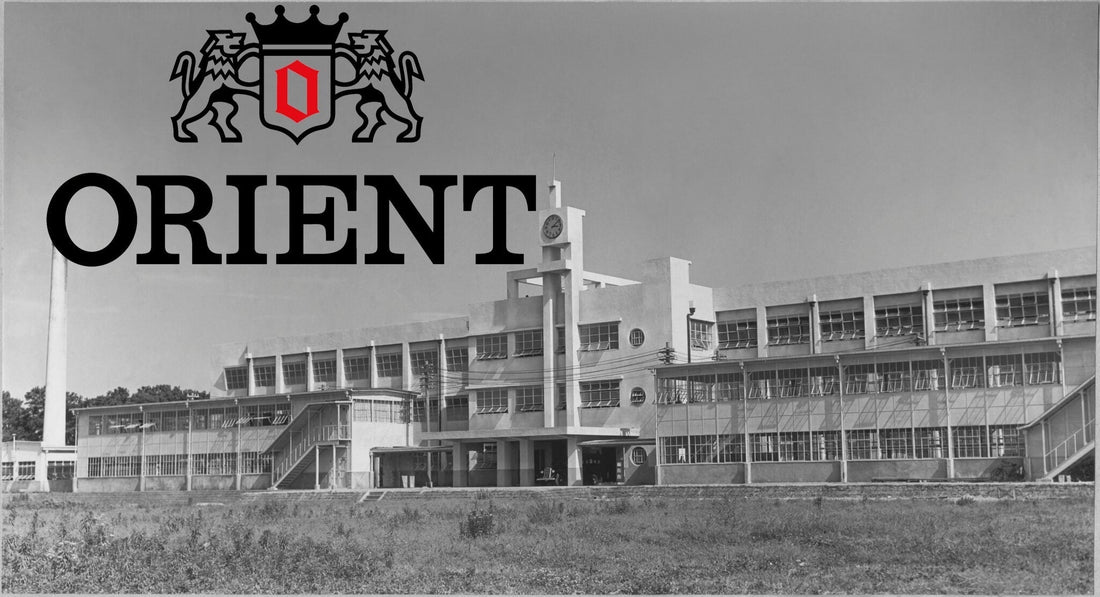
In the 1920s, Yoshida's dream expanded further. In 1920, he founded Toyo Tokei Manufacturing, a factory dedicated to the production of table clocks and grandfather clocks. Quality craftsmanship and Japanese ingenuity allowed the company to grow: in 1934, Toyo Tokei produced its first wristwatches, assembled in a state-of-the-art factory in Hino, a four-story building that was the pride of the industry at the time. It seemed like the beginning of a glorious rise, but history had severe trials in store for the young brand.
The outbreak of World War II radically changed Toyo Tokei's destiny. Civilian industry was repurposed for the war effort: the Hino factory was forced to cease watch production and devote itself to the construction of military equipment. At the end of the conflict, with Japan in economic difficulty, Yoshida's old company attempted to resume operations but soon found itself in dire financial straits and was forced to close. It seemed like the end of a dream. However, the Japanese spirit of resilience did not wane: the factory's employees, united by a common passion, decided to take their destiny into their own hands.
In 1950, from the ashes of Toyo Tokei, the Tama Keiki Company was born thanks to the initiative of those courageous former employees. Shogoro Yoshida, who had seen his business vanish during the war, found new hope in this rebirth. The following year, in April 1951, Tama Keiki officially changed its name to Orient Watch Company, Limited, marking the formal foundation of the Orient brand as we know it today. It was a turning point: after half a century of experiences, trials, and setbacks, the Orient adventure could finally begin again under a new light.
As early as the early 1950s, Orient demonstrated clear ambitions and a forward-looking vision. One of the first acts of the new Orient Watch Company was to hire Tamotsu Aoki, professor emeritus of the University of Tokyo and the first president of the Japan Horological Institute, as a consultant. Aoki, an enlightened theoretician, introduced advanced standards and methodologies that significantly improved the quality and reliability of Orient watches. In those same years, the brand also chose its name with a prophetic meaning: “Orient” in Latin derives from oriri, meaning “to rise” – a clear reference to the rising sun in the East and a symbol of rebirth. Not by chance, but by a declaration of intent: like the sun of the East, the company wanted to rise brighter than ever and aspire to success beyond the borders of Japan.
1950s: The birth of Orient Star and its international rise
 ORIENT's first mass-production watch.
From the beginning of its new life in 1951, Orient set itself the goal of competing globally with high-quality yet affordable products. The first mass-produced watch from the newly founded Orient was a simple, hand-wound mechanical timepiece with a small seconds dial, designed for a wide audience and at an affordable price. But alongside this basic model, founder Yoshida and his team also dreamed of creating a line of prestigious watches that would showcase the company's manufacturing capabilities to the world. Thus, just one year after its refoundation, in 1952 Orient launched the Orient Star line, destined to become the brand's flagship. Inspired by the concept of a shooting star (hence the evocative name), the first Orient Star featured refined details: thin blued steel hands, an elegant dial and superior finishing compared to standard models. Inside beat a new Orient-manufactured mechanical movement, specially developed with 10 or 15 jewels, capable of offering greater precision and reliability than previous calibers ablogtowatch.com. The Orient Star quickly became the symbol of the company's savoir-faire, demonstrating that even an emerging Japanese brand could compete in accessible haute horlogerie.
ORIENT STAR first watch

In the years that followed, the drive for innovation continued. Orient continued to improve its in-house movements and diversify its product offering. 1957 saw the launch of the Orient Star Dynamic, a sporty and elegant evolution of the flagship line, featuring a new, more robust “T-type” central movement with a center seconds hand and a Nivaflex spring, which replaced the older pre-war calibers. At the same time, the company also decided to target the luxury segment: in 1958, it launched its first high-end watch, the Royal Orient, a refined and technical model at the same time. The Royal Orient introduced cutting-edge features for the time, such as a waterproof case (a rarity in the 1950s) and a new, larger-diameter, 19-jewel automatic movement that was more stable and precise. This attention to both elegant design and movement engineering positioned Royal Orient at the pinnacle of Orient production and laid the foundation for future prestigious developments.
By the late 1950s, Orient had consolidated its presence at home and was beginning to look decisively at foreign markets. By 1958-59, the company had already begun exporting to countries such as Taiwan, the United States, Canada, Iran, and Brazil. Indeed, from those early years, Orient's international sales progressively outpaced those within Japan, ushering in a global reach that would remain a hallmark of the brand. By the end of the decade, Orient boasted a full range of reliable and competitive mechanical watches, from the simplest everyday model to the sophisticated Royal Orient—an extraordinary achievement considering that just ten years earlier, the company had to be rebuilt from the ground up.
The 1960s: technical innovation and bold design
The 1960s ushered in a period of growth and creative excitement for Orient. Building on its domestic success, the brand faced the challenges of the global market by focusing on both technological and aesthetic innovation. In 1964, Orient embraced the global boom in sport diving by launching its first diver's watch with a rotating bezel and high water resistance, known simply as the Orient Diver Origina. That same year, the company also revealed its most ambitious movement to date: the Grand Prix 100 caliber, housed in the eponymous Orient Grand Prix 100 model. This watch astounded the industry with an almost unbelievable technical feat: its automatic movement boasted a stunning 100 jewels. At a time when manufacturers competed to claim the most jewels (often exceeding actual technical requirements for marketing reasons), Orient swept away the competition with a three-digit number that was both impressive and symbolic of its expertise. The Grand Prix 100 symbolized Orient's willingness to push the boundaries technically, gaining the attention of enthusiasts and industry insiders around the world.

In parallel with mechanical advances, Orient began experimenting with the design of its timepieces in the 1960s, anticipating fashions and trends. Following the watch's transition from a simple instrument to a true style accessory, the brand introduced models with bold lines and colors. An excellent example was the Orient Fineness (1967), an ultra-thin watch that did not sacrifice functionality: its automatic 3900 series caliber measured just 3.9 mm thick, making this model the world's thinnest with an integrated day and date display. The Fineness combined elegance and technical innovation, embodying the spirit of that effervescent era.
Always looking to stand out, Orient launched watches with an unconventional look in the late 1960s: in 1968 the Orient Racer F3 appeared, featuring a truly original “egg-shaped” oval case. The following year (1969) saw the arrival of the Orient Nonscratch, which introduced scratch-resistant materials or treatments for the glass and case – an interesting first for the time. But perhaps the most distinctive model arrived in 1970 : the Orient Chrono-Ace “Jaguar Focus”, a timepiece that became legendary among collectors for its gradient-coloured, iridescent dial and distinctive coussin (cushion) case with nine-faceted glass. This watch, with its bold name and exuberant stage presence, consolidated Orient's reputation as a brand capable of daring even on an aesthetic level, adding personality and creativity to its products.
The 1970s: The Challenge of Quartz and the Resilience of Orient
The early 1970s marked a crucial turning point for the entire watch industry with the advent of quartz technology. While many Japanese and Swiss competitors were left behind or massively converted production to new battery-powered electronic movements, Orient maintained its identity as a specialist in mechanical movements. In 1971, the company introduced the new self-winding Caliber 46, developed entirely in-house: a smaller, thinner movement, featuring a “magic lever” device for efficient bidirectional winding, destined to become the mainstay of Orient production for the following decades. Thanks to this robust and precise caliber, Orient was able to continue offering quality mechanical watches just as many other brands were temporarily abandoning the traditional balance wheel for quartz.

This does not mean that Orient ignored new technologies: on the contrary, it demonstrated a great ability to adapt without sacrificing its soul. In 1976, it presented the Orient Touchtron, a digital LED watch developed in collaboration with the Japanese company Sharp, intended to compete in the electronic age. The Touchtron was the first watch in the world where the time was displayed by touching the case, without having to press buttons. This futuristic function – almost science fiction for the time – aroused curiosity (although in practice it could be activated accidentally, so much so that a second version added a traditional button) With models like the Touchtron, Orient demonstrated its ability to embrace innovation and compete head-on even in the new landscape dominated by quartz and digital displays.
Despite the invasion of low-cost quartz watches that brought many traditional manufacturers to their knees (the so-called "quartz crisis" ), Orient managed to resist thanks to diversification and careful choices. It continued to produce quartz and digital watches to keep up with the market, but at the same time never abandoned the mechanical line, indeed enriched it with unique models. In the 1970s, one of the most original and long-lived Orient timepieces was born: the Orient Multi Year Calendar (first produced in 1976), an automatic watch with a special multi-year calendar on the dial that allowed the date and day of any month of any year to be read by adjusting the crown just once a month. This model, with its unusual and useful complication, became a collector's favorite over time and was reissued in subsequent editions, keeping the allure of “utilitarian” mechanical watchmaking alive even in the midst of the electronic age.
By the end of the 1970s, Orient could call itself victorious: it had weathered the quartz storm while maintaining its tradition and credibility among enthusiasts, ready to face the challenges of the decades to come.
The 1980s and 1990s: Mechanical Continuity and New Inspirations
As the 1980s passed, Orient continued to follow its own path, remaining faithful to its origins. While it consolidated the production of quartz movements to remain competitive on the mass market, it never abandoned its mechanical roots. In fact, Orient was among the very few brands to maintain a significant share of automatic watches in its catalog (still around 70% of production in the 2000s) even when quartz dominated the market. This choice proved to be far-sighted: towards the end of the 1980s and the beginning of the 1990s, in fact, a resurgence of public appreciation for the craftsmanship and beauty of traditional movements began to emerge, laying the foundations for the rebirth of the mechanical watch.
In the 1990s, Orient seized this opportunity by launching models that highlighted the beating mechanical heart of its timepieces. A fascinating example was the Orient Mon Bijou (1991), a skeleton watch in which the movement was visible through the transparent case. The Mon Bijou, produced in a limited series, boasted fine hand finishing on every component and proudly displayed its inner workings, but remained an accessible watch in true Orient style. It was a success that anticipated the trend of skeleton watches and once again demonstrated the brand's commitment to celebrating traditional mechanics.
At the same time, Orient expanded its collection with new creative inspirations. The 1990s also saw the introduction of the Orient Star Retro-Future line, which combined vintage design elements with imaginative themes: the 2009 Retro-Future Road Bike model, inspired by the world of vintage bicycles, with dial and bracelet details that recalled wheel frames and spokes, is a famous example. In short, Orient entered the 21st century with a long and fascinating history, built on watchmaking tradition and a spirit of innovation, ready to write new chapters.
Orient in the new millennium: between tradition and new challenges
By the early 2000s, Orient had become a household name among watch enthusiasts, especially those seeking quality mechanical watches at affordable prices. The brand continued to maintain a perfect balance between classic craftsmanship and modern innovation. In 2004, Orient proudly presented what it called its masterpiece of the moment: the new Royal Orient. This high-end timepiece, assembled in a dedicated workshop of excellence (Orient Technical Center) inaugurated the previous year, was equipped with a newly developed mechanical movement (caliber 88700) and exhibited an elegant design that recalled in name and style the prestigious Royal Orient of 1959, yet updated to contemporary tastes. The first series in 2004 was limited to just 100 units, but from 2008 the Royal Orient entered regular production, a sign of the brand's continued commitment to the accessible luxury segment.
Meanwhile, from an industrial perspective, Orient was undergoing significant corporate changes. In 2001, the Japanese giant Seiko Epson acquired 51% of Orient Watch Company, becoming its majority shareholder and beginning a gradual integration. The transaction was completed in 2009, when Orient became a 100% subsidiary of the Seiko Epson Group. This move brought significant benefits: increased resources, shared technologies, and a stronger global distribution network. Despite this, Orient retained its creative independence and brand identity : it still operates today as a distinct entity within the Epson universe, focusing on its historical values. . It is emblematic that Orient continues to design and produce most of its mechanical movements in-house (with a few exceptions such as the “Light-Powered” solar movements licensed from Citizen). This technical autonomy guarantees the brand rigorous quality control and the ability to innovate according to its own vision.
Today Orient offers a vast and diverse catalogue, ranging from elegant classic dress watches (many of which belong to the famous Orient Star line) to robust sports diving watches such as the highly appreciated Orient Mako and Orient Ray, capable of resisting up to 200 metres underwater. There's also no shortage of models with modern complications such as world time display, moon phases, power reserve, and of course the beloved skeleton and semi-skeleton models that showcase the movement. The underlying theme, however, remains the same: offering superior quality watches at the right price, combining technical precision and attention to aesthetic detail. Just think of the famous Orient Bambino, a classic men's watch with a clean, retro design, considered by many to be a benchmark for those who want to enter the world of automatic watches without spending a fortune. With its applied indexes, domed crystal and understated dial, the Orient Bambino embodies the Orient philosophy: timeless elegance and reliable mechanics within everyone's reach.
In an age dominated by smartwatches and digital displays, Orient continues to inspire enthusiasts with its mechanical timepieces, jealously guarding a legacy that has lasted over 70 years. Every Orient watch, from the simplest to the most complicated, tells a story of passionate craftsmanship, innovation, and resilience. It is the story of a brand born in a small shop in Tokyo, which has endured wars, technological revolutions, and generational changes without ever losing its "North Star." Orient shines today with the same enthusiasm as its origins: whether it's a classic Orient Star or a modern Mako diver's watch, the wearer's wrist beats not only a precision movement, but also the heart of a timeless tradition. And as its name suggests, Orient continues to "rise" every day, renewing the magic of passing time and the beauty of traditional mechanical watchmaking.
Curiosities and anecdotes about the Orient watch brand
In addition to its rich history, Orient is surrounded by interesting facts and anecdotes that underscore its charm. Here are a few:
- In-house through and through: Unlike many brands that purchase calibers from third parties, Orient has had the distinction of producing most of its mechanical movements in-house since the 1950s. This approach, maintained even when quartz seemed destined to dominate, has allowed the company to control quality down to the last detail and stand out for its reliability. Even today, enthusiasts appreciate Orient movements for their robustness and longevity. .
- The meaning of the name: As mentioned, "Orient" is not only a geographical reference to the East, but also contains a symbolic message. It derives from the Latin oriens (participle of oriri ), meaning "rising." A poetic choice that recalls the idea of the rising sun, a metaphor for hope and rebirth—perfect for a brand that has risen from hardship and is destined to shine in the world. .
- 100 jewels, an all-time record: The 1964 Orient Grand Prix 100 featured a movement with 100 jewels, the highest number ever seen in an automatic wristwatch of the time. Of course, such a number of stones was far beyond what was necessary (many were decorative rubies or used to win the “ruby race” of the time), but it served to demonstrate Orient’s technical capabilities and remains a highly curious collector’s piece for aficionados to this day.
- A touch-sensitive watch before its time: the aforementioned Orient Touchtron from 1976 was ahead of its time. It allowed the user to activate the LED display by simply touching the case with a finger, a futuristic idea that was unique at the time. In a sense, Orient had pioneered the concept of tactile interaction with the watch decades before today's smartwatches.
- The Bambino and the rediscovery of the classic: the Orient Bambino deserves its own anecdote. Initially launched in the 2000s, this simple and elegant watch with a date display has won over enthusiasts young and old, becoming an iconic model. Its nickname, "bambino," seems to have arisen affectionately among collectors to indicate its almost "childish" vintage style in its purity. Today, the Bambino, now in various editions and colorways (the version with a champagne dial is famous), is considered one of the best entry-level mechanical watches in the world in terms of quality/price ratio, often recommended for those looking to take their first step into traditional watchmaking.
- Orient Mako: The Democratic Diver: Among sports watches, pride of place goes to the Orient Mako, the diver's watch introduced in the mid-2000s and still extremely popular today. The Mako (followed by the Ray variant and recent evolutions such as the Kamasu and Mako III) offered true diver's features—a steel case, 200m water resistance, a rotating bezel, and a reliable automatic movement— at an extremely competitive price, around a few hundred euros. The name “Mako” was informally given to it by the enthusiast community (referring to the mako, a type of shark) and then adopted commercially. This timepiece introduced many to the world of mechanical sports watches and remains a best-seller for those seeking adventure on the wrist without breaking the bank.
In conclusion, the Orient saga is one of technical achievements, courageous decisions, and a love of watchmaking. From Yoshida's humble shop in 1901 to today's international prestige, Orient's journey teaches that tradition and innovation can go hand in hand. Every Orient watch tells a chapter in this story: wearing one means carrying a piece of Japan, a symbol of perseverance and timeless passion. Whether it's the Orient Star, the Royal Orient worthy of a king, the robust Mako, or the refined Bambino, the message remains unchanged across the generations: time passes, but Orient's authentic values continue to shine, today as yesterday, under the rising Eastern sun.
Credits: orient-watch.com - Wikipedia - ablogtowatch.com - ilcorrierino.it